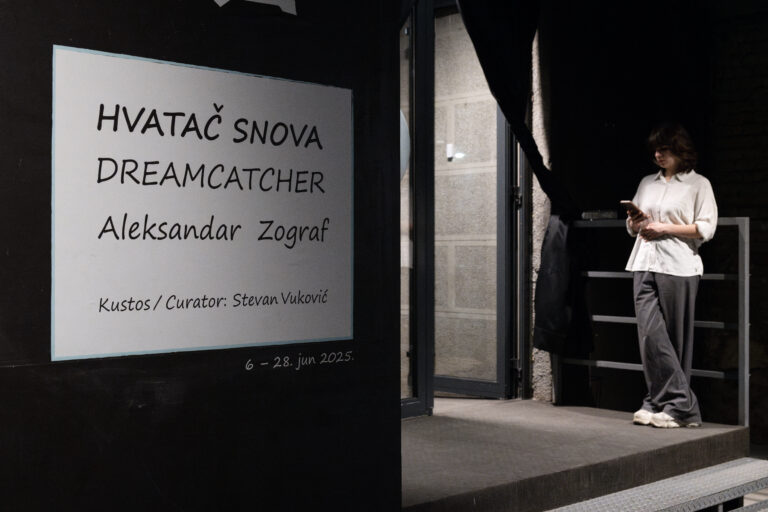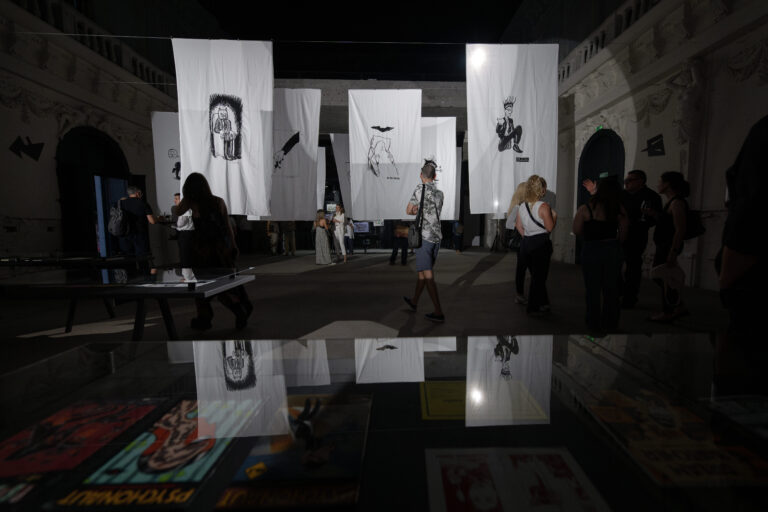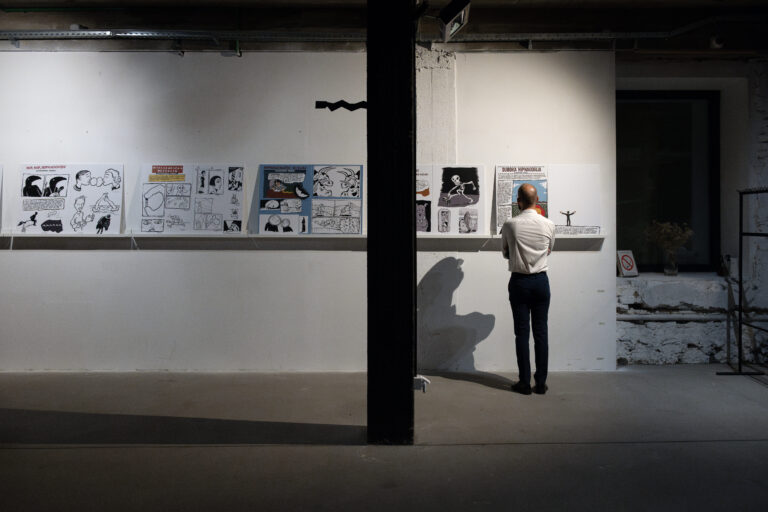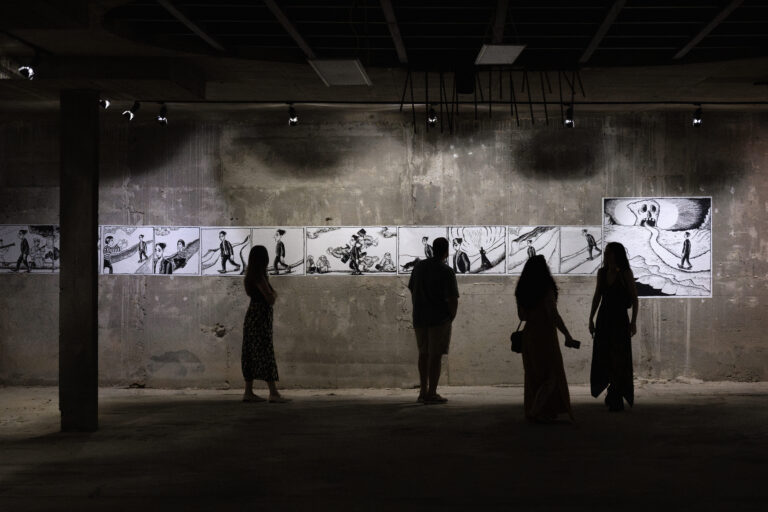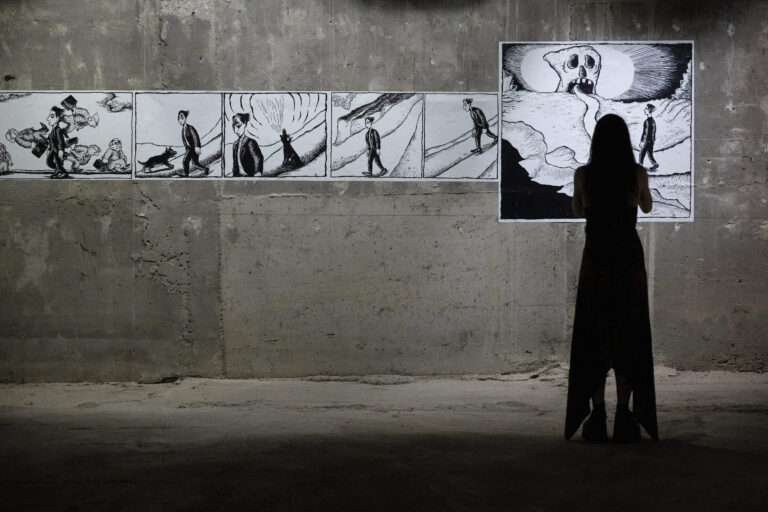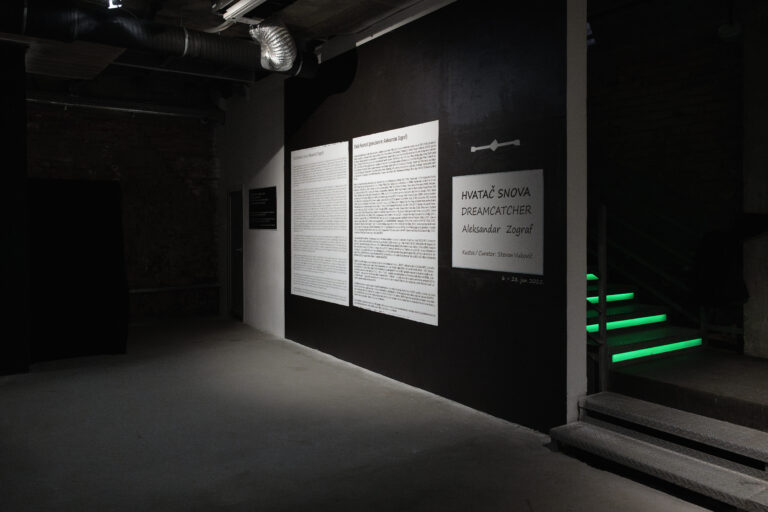



June 6th until June 28th, 2025
Curator: Stevan Vuković
Dreamcatcher
Although he had been publishing his comics locally in Serbia since 1986, in magazines such as NON, Ritam, Rock, Mladost, and others—alongside his reviews of avant-garde trends in rock music, which he had begun even earlier in Džuboks—the international career of Aleksandar Zograf began only in 1994, when the American publishing house Fantagraphics Books released his comic book Life Under Sanctions. Since then, in addition to being widely featured in magazines and anthologies, he has published solo comic books in the UK (Dream Watcher, Bulletins from Serbia), Italy (Diario, Lettere Dalla Serbia, Psiconauta, Saluti dalla Serbia, C’è vita nei Balcani, Appunti 1, Appunti 2), France (E-Mails de Pančevo, Bons Baisers de Serbie, Vestiges du monde), Spain (Como Fui Bombardeado por el Mundo Libre, Fin de Siglo, Vida en los Balcanes), Croatia (Tusta i tma), Finland (Elämää Saarroksissa), Germany (Psychonaut), Greece (Χαιρετίσματα από τη Σερβία), and Hungary (Pszichonauta). Aleksandar Zograf is the alias of Saša Rakezić, a name he gave himself, while later, in an interesting set of circumstances, he was given another: Dream Watcher.
Indeed, back in high school, as a member of the punk band Pak-Papir, he created the fanzines Kreten and Iznad, and began exchanging them within a highly developed network of zine makers who used regular mail to distribute these DIY experimental graphic-textual creations—much like the Fluxus artists had done earlier. At the time, many American alternative, underground, and other unconventional and experimental comic creators also relied on these networks, due to the notorious Comics Code Authority (in force from 1954 until 2011), which severely censored officially published and distributed comic content.
Through this network, Rakezić came into contact with the publisher of a magazine issued by the Pan-American Indian Association. He received a reply to his letter from Chief Piercing Eyes, who was leading the association at the time. This sparked a correspondence between them, during which Rakezić conducted an interview with the chief, later published in the magazine Vreme in 1992.
Since Rakezić had mentioned in his letters that he had always been fascinated by Native American culture—and that, even as a child, he had vivid dreams on the subject—Chief Piercing Eyes proposed that he become a member of their association. This also came with the bestowal of a new name: Dream Watcher.
Why, then, is this exhibition titled “Dreamcatcher” and not “Dream Watcher”?
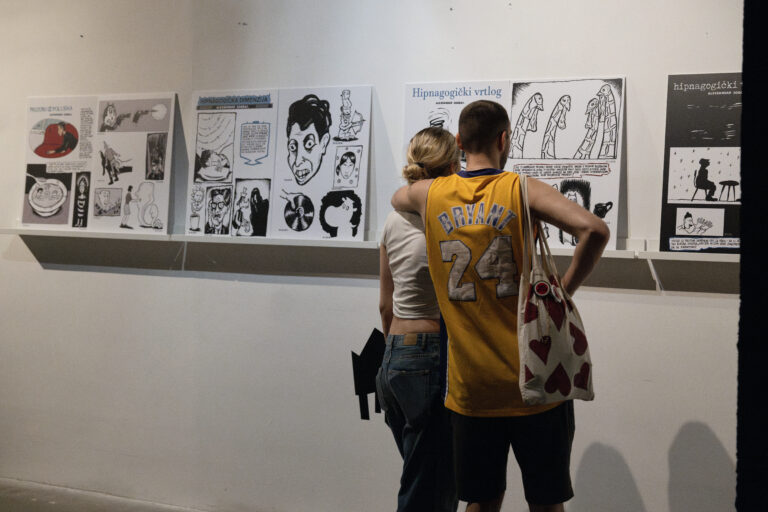
In a comic titled Hypnagogic Moment, Zograf includes a block of text in which he writes: “Visions from the edge of sleep flicker only for a moment—is it that very elusiveness, that internal flash, that makes them so mysterious—assuming we even manage to remember them?” That flash of imagery born in a dreamlike state is so fleeting that, unless recorded immediately, it quickly vanishes from memory.
Zograf is not alone in his attempt to catch dreams. A similar approach was taken in the local context by Vladan Radovanović as early as the 1970s. And within the realm of American underground comics—into which Zograf himself ventured—the most consistent practitioner was undoubtedly Robert Crumb. Seven years ago, a collection of Crumb’s daily visual and written dream recordings, spanning four decades, was published by Elara Press in a 560-page volume titled Robert Crumb’s Dream Diary, selected and edited by Ronald Bronstein and Sammy Harkham.
Both artists, whom Zograf looked up to, were featured—alongside over twenty others—in the comics anthology Flock of Dreamers, which he co-edited with American comic artist Bob Kathman for Kitchen Sink Press in 1997. The cover of that edition showed self-portraits of each contributor in their most typical dream-flying pose, drawn by themselves.
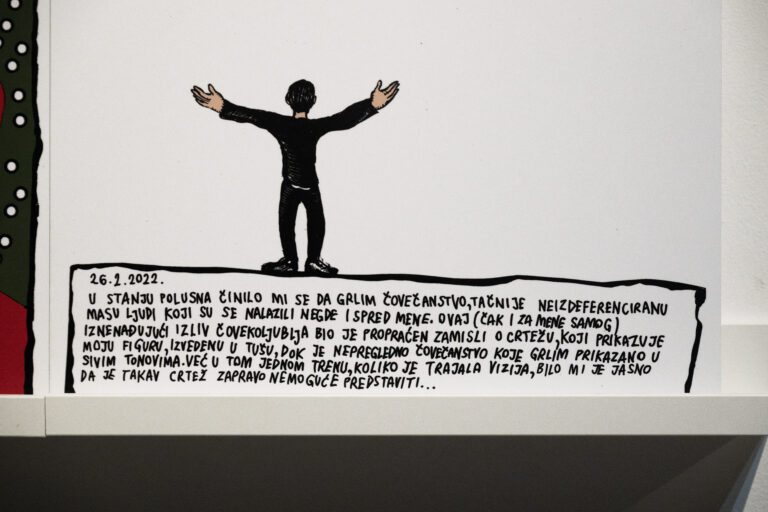
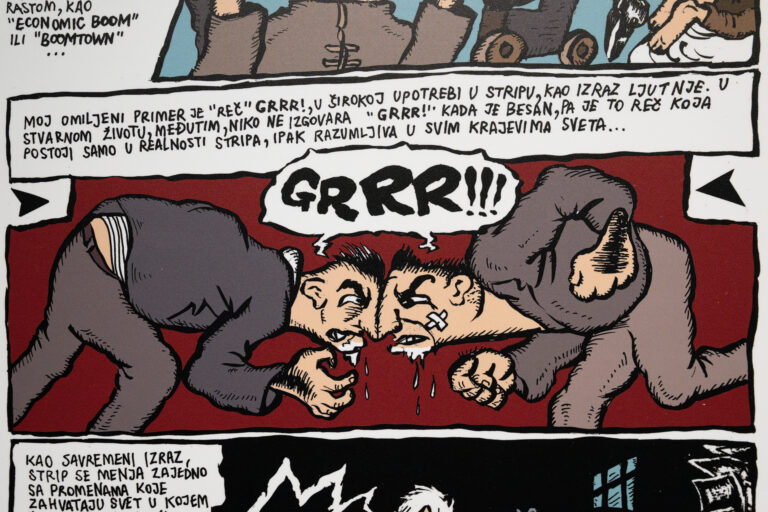
Like the other authors featured in this anthology, Zograf is most often present in his comics through his own likeness, appearing both as the protagonist of the narrative and as the narrator. He frequently offers meta-commentary on the storyline via speech bubbles that reflect the direct voice of the protagonist.
In the book by Elisabeth El Refaie, Autobiographical Comics: Life Writing in Pictures (published in 2012), the portrayal of a comic’s protagonist through an author’s self-portrait is said to imply an embodied self, a depiction that must be considered from both formal and socio-cultural perspectives. Even though it always involves a performative construction of narrative authenticity through the character’s physical and verbal acts, it must still be understood as a narrative-iconic construct.
The comic artist is, simultaneously, both a visual interpreter—finding an appropriate graphic form for dreamlike scenes and the protagonist’s behavior—and a storyteller, who conveys the character’s speech and thoughts through verbal elements like speech bubbles and textual commentary. In this sense, the author becomes a witness—a dream-catcher—who brings us content from the world of dreams. However, this is not done neutrally: rather, through his artistic language, he presents imaginative projections of what has been experienced and lived in the dream world.
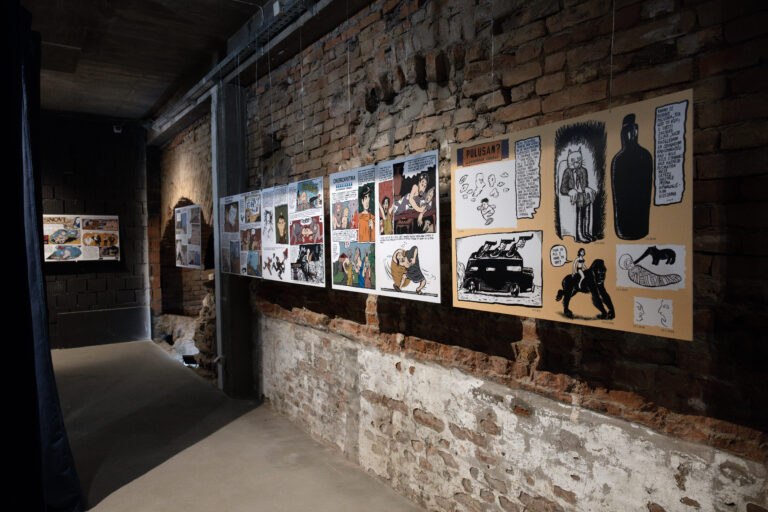
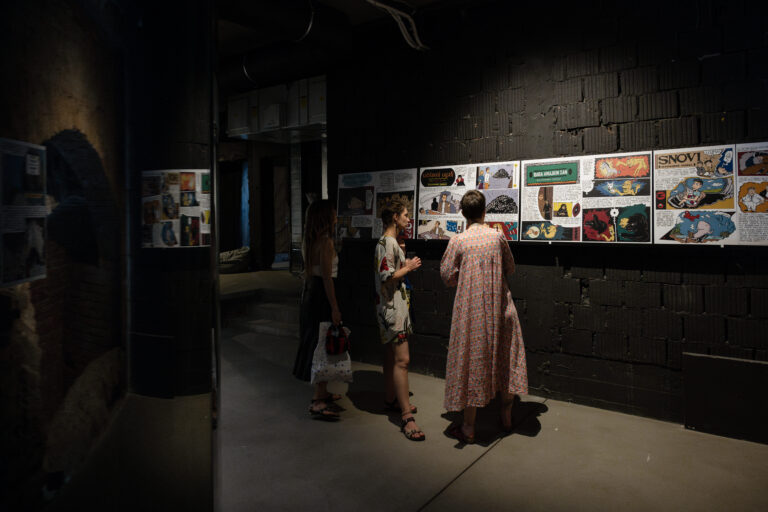
It is important to emphasize that within the structure of the global comics scene—which is tightly interconnected not only through publishers and magazines but increasingly through fairs and festivals—Zograf’s name stands firmly in the categories of independent, avant-garde, art, and alternative comics. These works are not sold at newsstands, but rather in specialized bookstores—such as Beopolis in Serbia—or at events like “Fijuk.” Moreover, they are increasingly being exhibited in galleries and contemporary art museums.
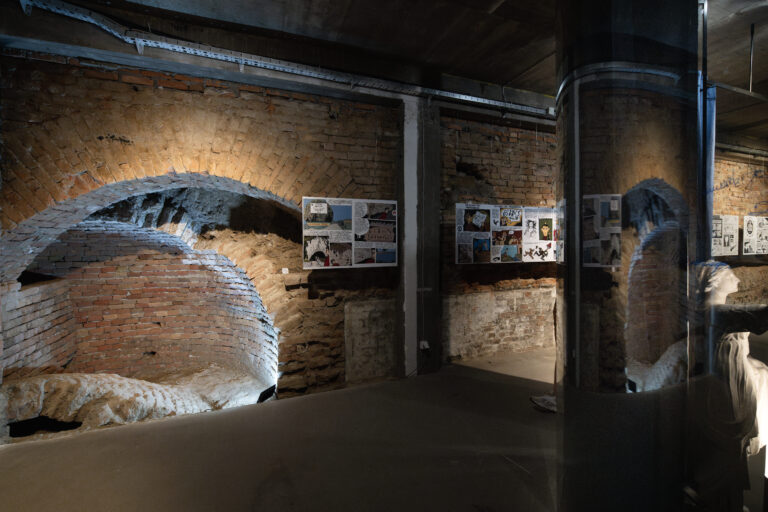
For example, Robert Crumb was featured in the main exhibition of the Venice Biennale in 2013. In Zograf’s own biography, we find a number of solo exhibitions held in the following venues: Pančevo (Galerija Nova), Belgrade (Underground, Ozone, Magacin in Kraljevića Marka Street, Official Gazette Gallery, Remont), Seattle (Roq la Rue), Paris (Regard Moderne), San Francisco (Cartoon Art Museum), Poitiers (Fanzinotheque), Rome (Mondo Bizzarro), Thessaloniki (Cofix), Vienna (Machfeld Gallery, Transporterbar, MuseumsQuartier).
According to Charles Hatfield’s 2005 book Alternative Comics, the defining characteristics of this type of comic are that their authors do not adhere to any particular genre, but rather “explore the full palette of the comics medium’s creative potential.” Furthermore, they have“breached the limits of the traditional comic book on every level, including packaging, publication, narrative form and thematic content.”
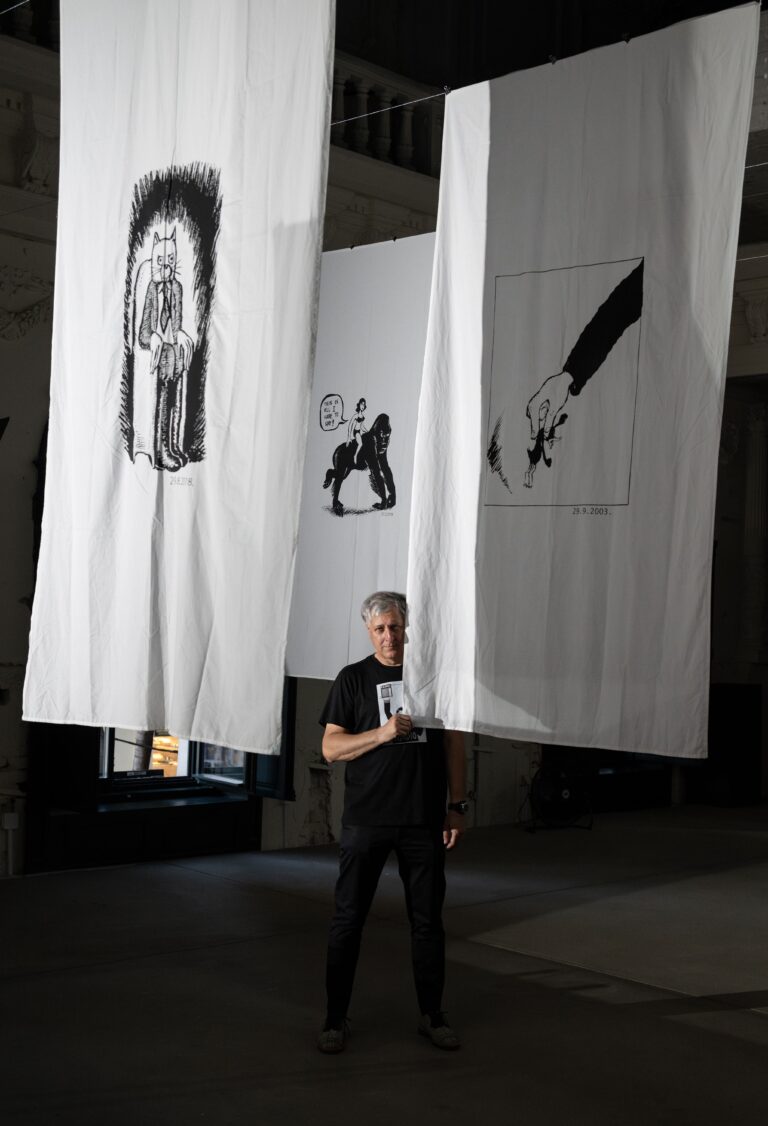
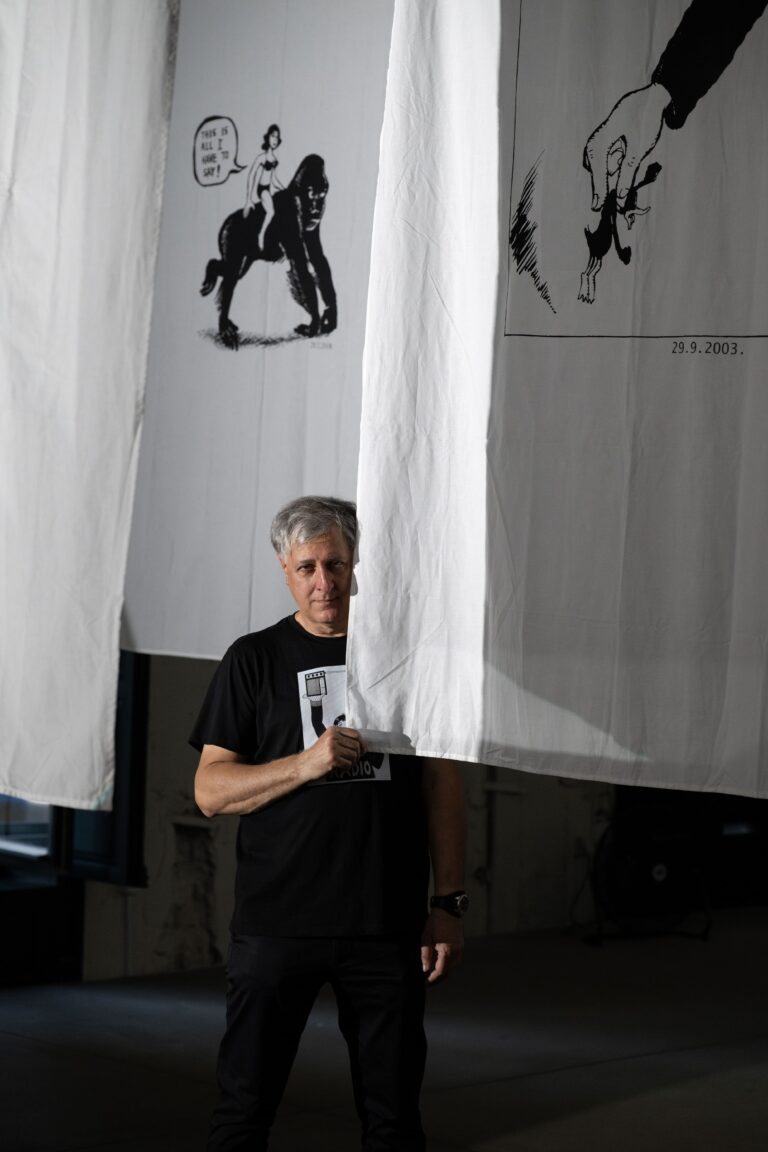
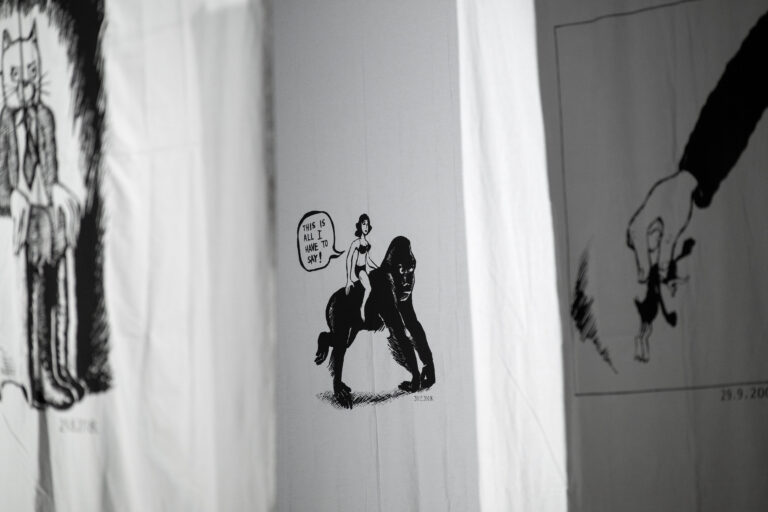
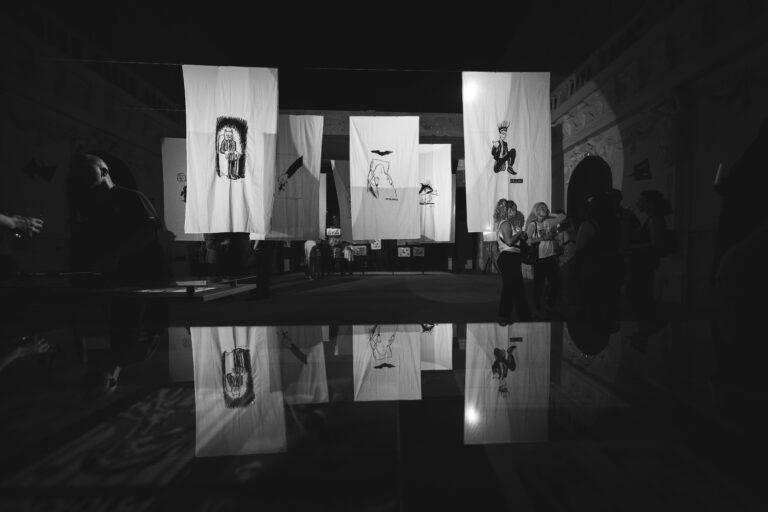
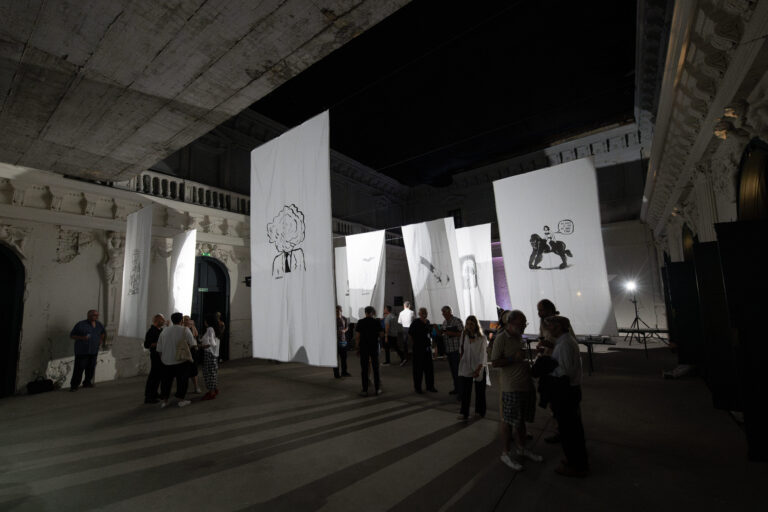
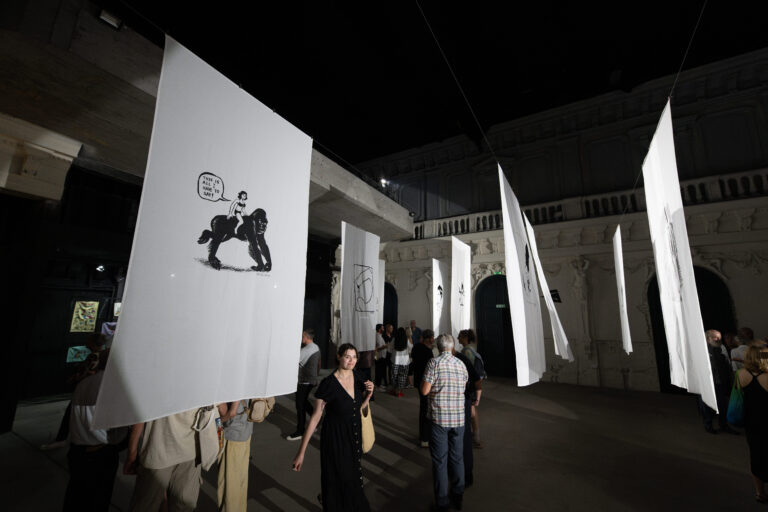
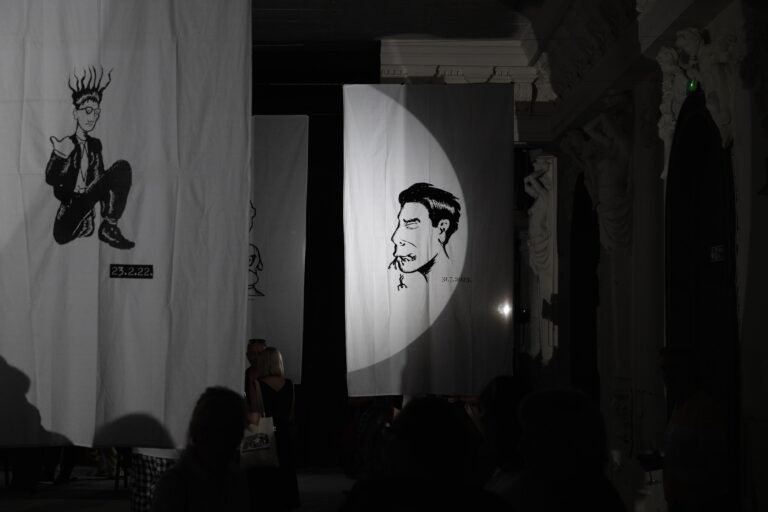
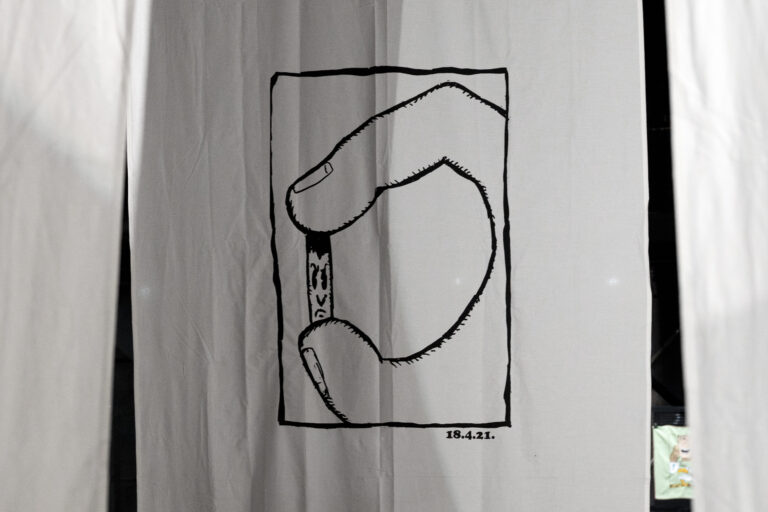
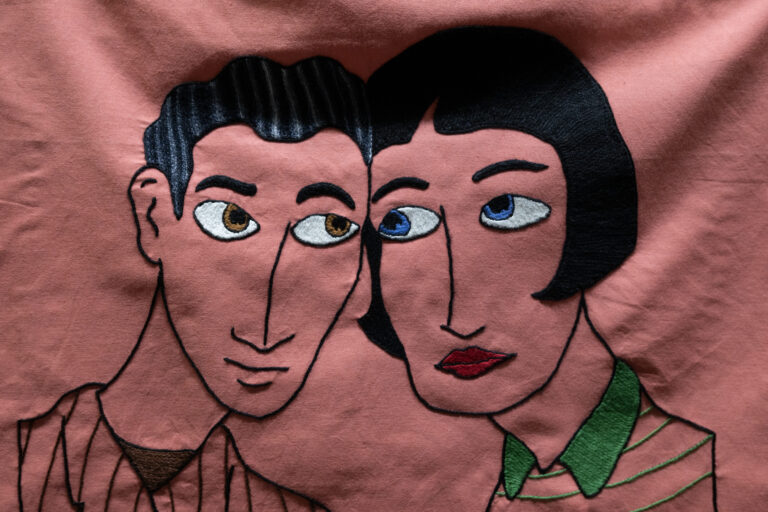
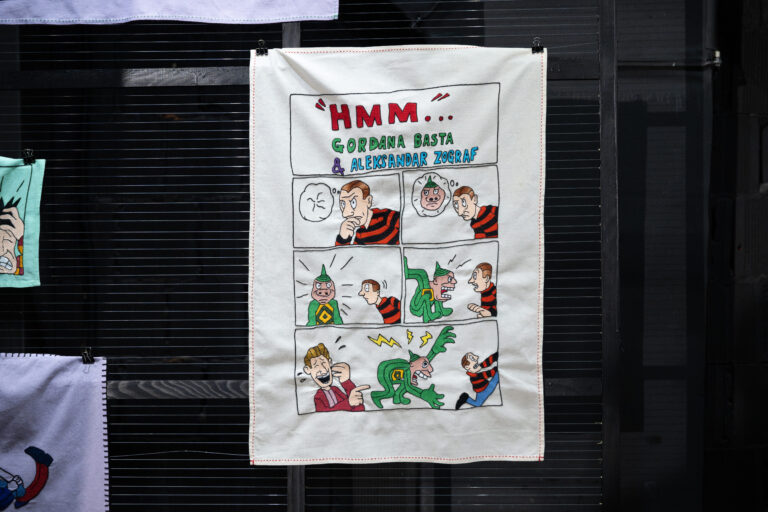
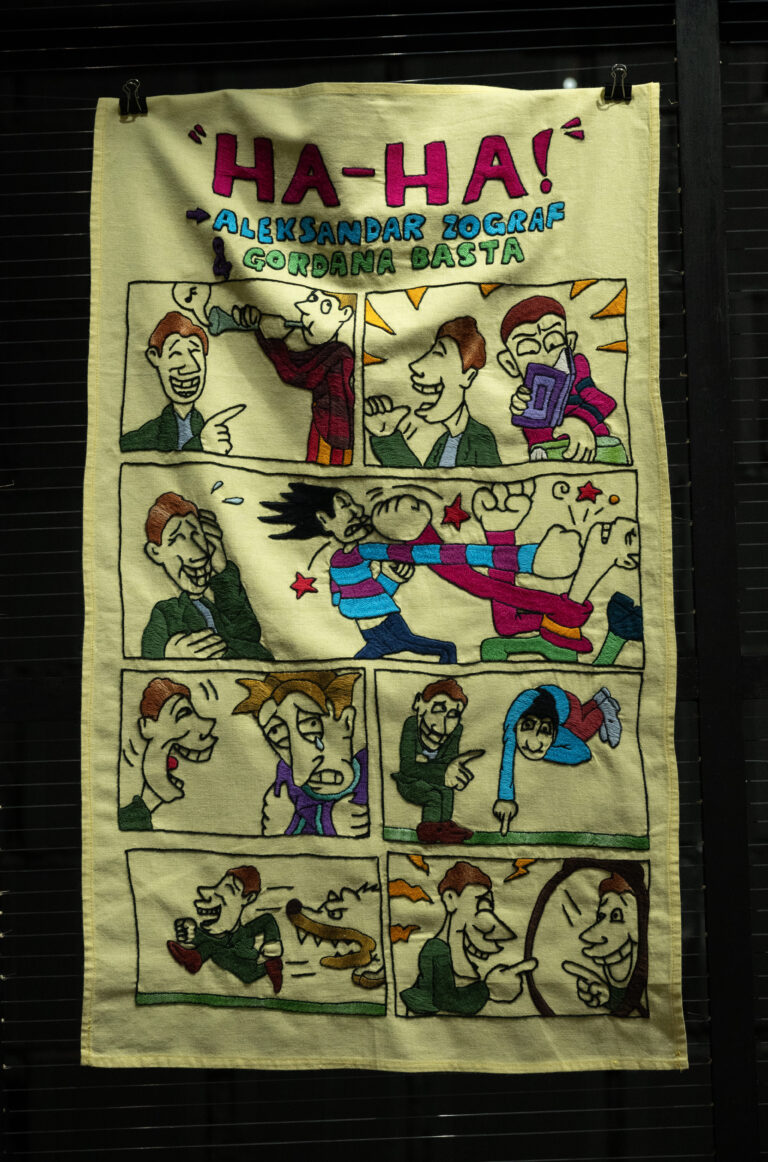
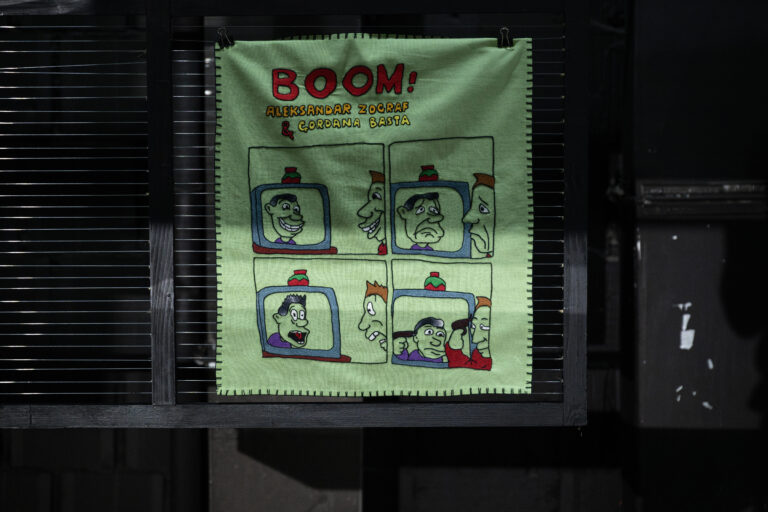
In this exhibition, as in many of Zograf’s previous ones, Gordana Basta plays a co-authorial role, contributing works that are material transpositions of scenes from Zograf’s comics through embroidery on canvas. A kind of theoretical and historical legitimization of this approach can be found in the comic Our Embroideries, in which Zograf presents an essay by Stanislav Vinaver about traditional folk embroidery. In it, Vinaver asks:
“What are the infinitely subtle twitches in the works of humanity’s most delicate poets, of Horace and Mallarmé? There is longing in them: to be sensed, but not fixed in place. A heightened awareness of the beautiful lightness of existence demands that the heart be spared the violence of rules… From the same fragile material as words, syllables, and concepts, so too is the embroiderer’s world made. The entire universe of the embroiderer depends on the quiver of a single thread. And yet the eyes are capable of grasping that whole order in an instant—something that never happens in a poem.”
The curator of the exhibition is Stevan Vuković, who will interpret the creation process and the exhibited works using both formalist and psychoanalytic theories of comics. The formal analyses are based on models drawn from Thierry Groensteen’s books The System of Comics and Comics and Narration, which examine the relationship between the figurative and the non-figurative, the poetic quality of the story, stylistic characteristics, the way subjectivity of the protagonist is explored, and the hybrid nature of comics as a medium that adopts certain techniques from contemporary art. These books also outline the general history of comics theory, which—following the writings of Pierre Fresnault-Deruelle—is divided into archaeological, socio-historical, structuralist, and finally semiotic and psychoanalytic periods.
On the other hand, beginning with the dream comic by Hungarian author Nándor Honti—sent to Freud via Sándor Ferenczi and fully published and interpreted in the fourth edition of The Interpretation of Dreams (in Selected Works of Sigmund Freud, Matica Srpska, 1984, Volume VII, page 22)—the exhibition will explore how various psychoanalytically oriented theories approach comics with dream-related themes.
Zograf himself has recently examined Honti’s historical position and significance, as well as his connection to Winsor McCay, an even earlier illustrator of dream comics. However, in doing so, Zograf deliberately positioned himself solely as a comics historian, setting aside any psychoanalytic interpretation of Honti’s work.
In this sense, it is notable that Zograf insists on engaging with dreams strictly as a practitioner, exploring and presenting them through personal experience, but not interpreting them—unlike comics, which he approaches as a practitioner, historian, and theorist.
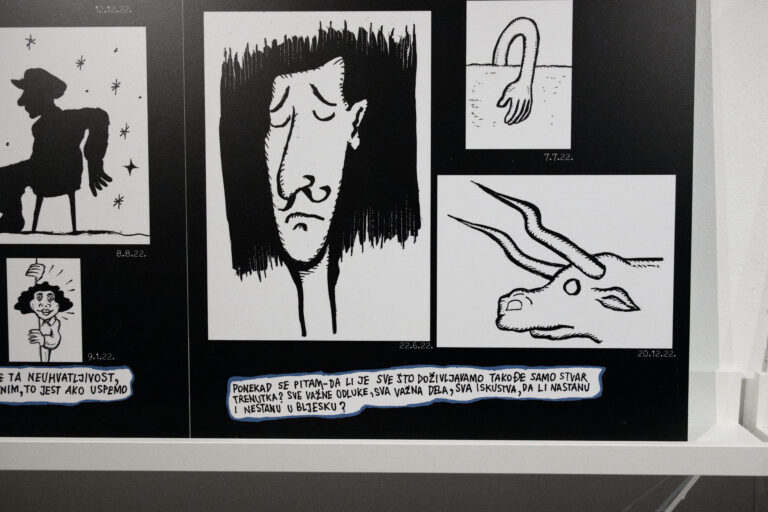
Special attention will be given to Zograf’s interventions in the intericonic space—the areas between panels—where deviations from conventional narrative structures often appear. These include undefined forms that, at first glance, have an unclear narratological function, marking the intrusion of non-figurative content into the flow of a figuratively represented narrative.
– Stevan Vuković